
Beyond the Workshop Room
Facilitation as a Leadership Skill for Life
By David Harry Spark
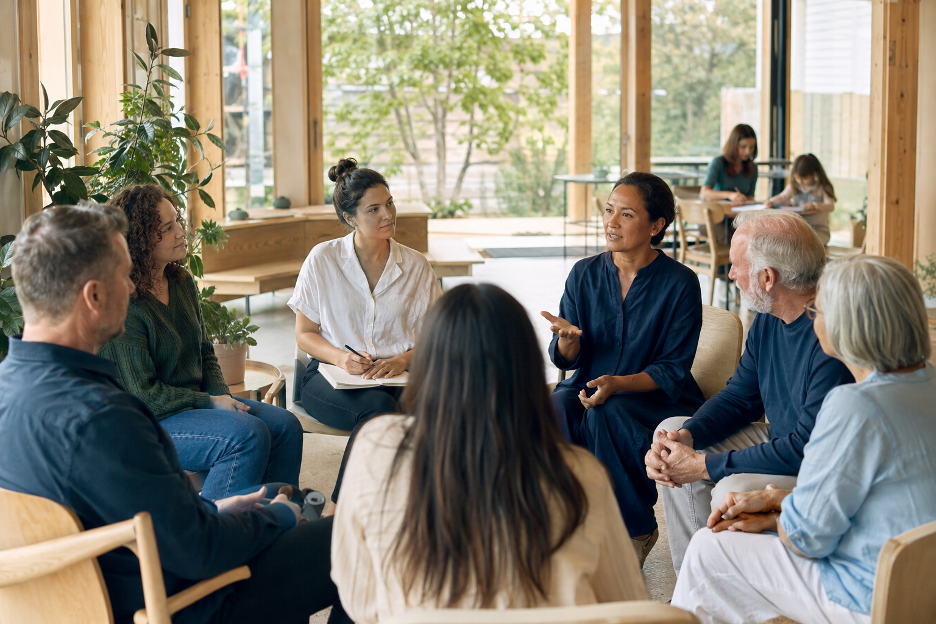
Leadership is often treated as something that begins with a promotion. Yet long before we receive a title, we are already influencing conversations, helping people navigate uncertainty and shaping what happens next. Facilitation gives us a practical way to do this with greater awareness, skill and care.
Leadership happens wherever people meet
Ask people where leadership happens and they may point to an executive office, a boardroom or a team meeting. But leadership is not confined to organisational charts. It appears wherever people need to understand one another, make a decision, resolve a difference or move towards a shared purpose.
It happens when a colleague makes room for a quieter voice. It happens when a family works through a difficult decision without allowing the loudest person to dominate. It happens when neighbours come together around a local issue, or when a volunteer helps a community group turn concern into constructive action.
In each situation, leadership is less about having the answer and more about helping people participate in finding a way forward. That is where facilitation becomes a leadership skill for life.
From directing people to creating the conditions
Traditional images of leadership often place one person at the centre. The leader speaks, decides and directs, while everyone else follows. There are moments when clear direction is necessary, particularly when time, safety or accountability demands it. But many of the situations we face are too complex for one person to solve alone.
Facilitation offers a different form of leadership. A facilitator pays attention not only to the task, but also to how people are engaging with the task and with one another. They create conditions in which people can contribute, question assumptions, explore disagreement and take ownership of decisions.
This does not make facilitative leadership passive or indecisive. It requires the confidence to provide structure without controlling every contribution, and the discipline to remain curious when it would be easier to impose a conclusion. The facilitator leads the process so the group can do its best thinking.
A skill we carry into every part of life
At work
At work, facilitation helps leaders move beyond running meetings and giving instructions. It strengthens the everyday practices on which good leadership depends: listening carefully, framing useful questions, drawing out different perspectives, clarifying what has been decided and building genuine commitment to action. A facilitative leader does not assume that silence means agreement or that attendance means involvement. They notice who is contributing, whose knowledge is missing and what the group may be avoiding.
In families
Families also need ways to work through competing needs, strong emotions and changing circumstances. Facilitation skills can help us slow a conversation down, distinguish understanding from agreement and make space for people who process their thoughts differently. The aim is not to turn the dinner table into a formal workshop. It is to bring the same qualities of presence, curiosity and fairness into conversations that matter.
In communities
Community life depends on people who can convene others across differences. Local groups, clubs, associations and volunteer organisations often contain strong commitment but limited time, uneven power and differing expectations. Facilitation helps convert that diversity from a source of friction into a source of intelligence. It enables people to participate without requiring them to agree on everything, and to act together without erasing their differences.
The small practices that change a conversation
Facilitation can sound like a specialised profession, and professional facilitation certainly involves a substantial body of knowledge and practice. But its foundations are accessible. We begin by noticing how we participate in conversations and what our presence makes possible for others.
We can ask one more question before offering our opinion. We can summarise what we think we heard and invite correction. We can separate the person from the problem. We can name a tension without immediately trying to remove it. We can check whether the group has reached genuine agreement, rather than simply running out of time. We can design conversations so that reflection, contribution and decision making are not reserved for the quickest or most confident speakers.
These practices may appear modest. Repeated consistently, however, they change the quality of participation. They help people feel heard without promising that everyone will get their preferred outcome. They strengthen clarity without pretending that complexity has disappeared. Most importantly, they distribute responsibility, allowing people to become contributors rather than spectators.
Learning through experience
Facilitation is difficult to learn from explanation alone. We need opportunities to experience thoughtful process, practise new approaches, observe their effects and reflect with others. A well-designed learning environment lets us notice habits that are otherwise invisible: how quickly we fill silence, how readily we privilege some voices, and how often we confuse having a view with helping a group think.
For people who would like an accessible introduction, the Facilitation Skills Essentials Workshop on Monday 12 October in Geelong offers a distinctive opportunity to encounter facilitation in practice. Supported by both IAF Oceania and Groupwork, the workshop is being offered at a heavily reduced rate ($660) to make foundational facilitation development available to a wider group of participants.
It is relevant not only to people who identify as facilitators. Leaders, managers, coaches, educators, volunteers and community contributors can all benefit from learning how to create more purposeful, inclusive and productive conversations. Participants can take these capabilities back into meetings and workshops, but their value is unlikely to stop at the workplace door.
Beyond the room
The deepest value of facilitation may not be found in any single method or workshop design. It lies in a way of relating to people. It asks us to believe that others have something worth contributing, that disagreement can contain useful information and that the quality of a process shapes the quality of its outcome.
Leadership understood in this way is not a position we occupy. It is a practice we carry. We carry it into the workplace when we help a team make sense of complexity. We carry it home when we listen without rushing to fix. We carry it into the community when we help people with different perspectives find enough common ground to act.
The workshop room may be where we first learn the craft. Life is where we practice it.
You can register for this one-day workshop at https://www.facilitationinaction.com.au/pre-conference-workshops