
More Than Three Letters: Why CPF Matters
By Quelia Phan
Dave Lavers has facilitated in boardrooms, community halls and conference centres across the Asia-Pacific. He spent 19 years in the Australian Army before discovering facilitation in 2013, and built a business around it shortly after. But it was not until he sat the Certified Professional Facilitator assessment in 2014 that something shifted.
He describes the experience as finding a language for understanding what he was already doing.
That language is the IAF Core Competencies. And for facilitators around the world, pursuing the CPF credential through the International Association of Facilitators is less about adding letters to a business card and more about what the process asks practitioners to examine in themselves and their practice.
What Is the CPF?
The IAF Certified Professional Facilitator is a globally recognised credential for professional facilitation. Introduced in 1998, it is built around six Core Competencies that define what effective facilitation looks like in practice, from creating collaborative client relationships to guiding groups towards clear outcomes and modelling a positive professional attitude.
The process unfolds in two stages: a written application demonstrating how the competencies have been applied across real facilitation work, followed by a live assessment that includes a role-play with assessors, interviews and a facilitation demonstration. The process can take months.
But that, practitioners say, is the point. The CPF is not simply a certificate for completing a course. It is an assessment of how a facilitator actually works with groups, clients and complex situations.
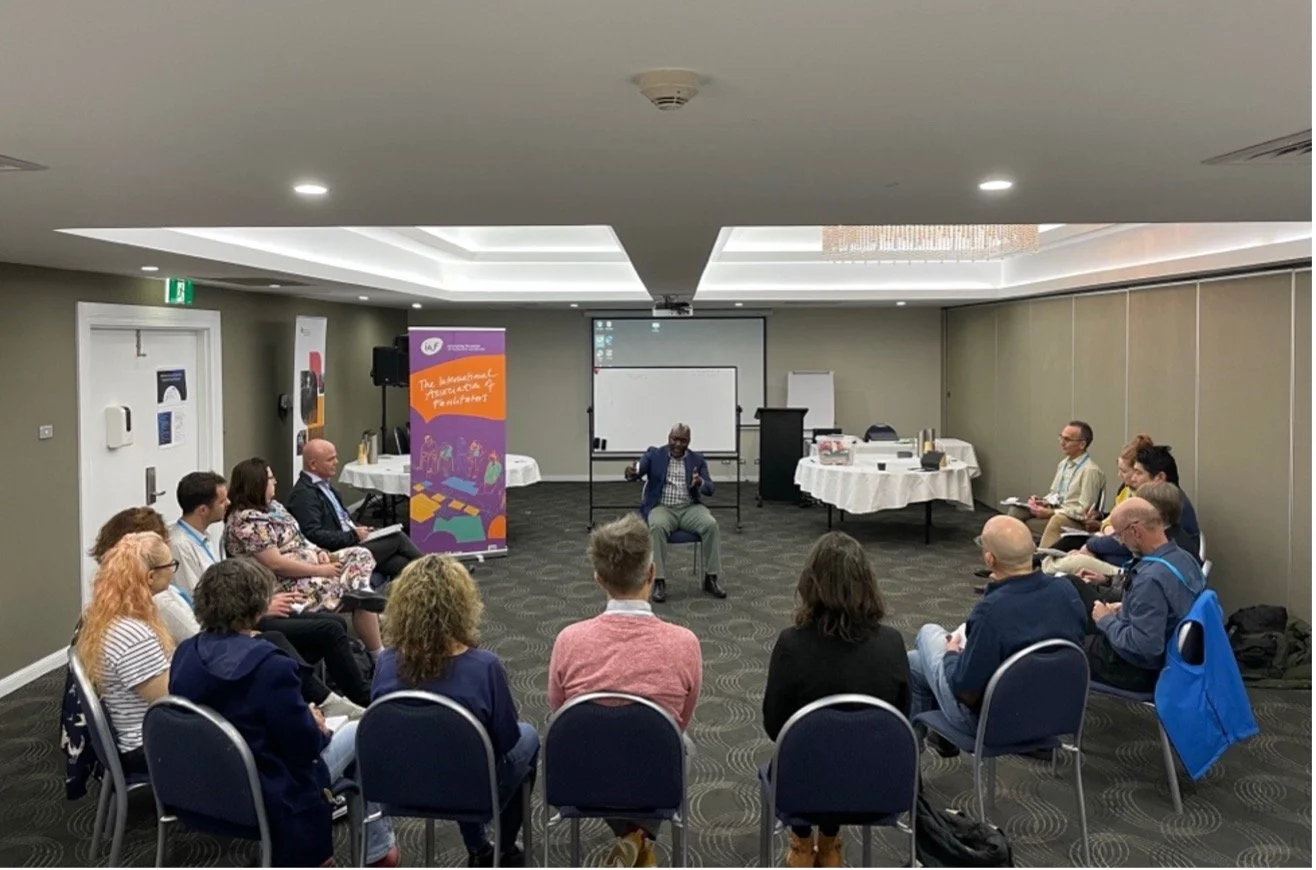
A facilitation session at an IAF event. Photo courtesy of Dave Lavers
A Mirror, Not a Trophy
Linmin Zhang, IAF's Director of Professional Development and a CPF herself, spent around half a year working towards her certification.
"This journey helped me reflect on why some workshop programs work, and why some do not," she says. She now uses the Core Competencies as a daily guide. "It is like the North Star for me."
For Dave, the value was similar: not simply learning new techniques, but developing greater self-awareness. The process asks practitioners to document their work, examine it against a rigorous standard and receive detailed feedback from experienced assessors. In a field where anyone can call themselves a facilitator, that kind of independent evaluation matters.
Beyond the Facilitator
The value of facilitation extends beyond the person leading the room.
Organisations navigating change, strategy and complex stakeholder environments increasingly need people who can do more than run a meeting. Skilled facilitators help groups have difficult conversations, hear different perspectives and create the conditions for people to work towards shared outcomes. The CPF signals that a facilitator's practice has been assessed against rigorous standards by experienced Certified Assessors, providing clients and organisations with another way to identify practitioners whose skills have been independently evaluated.
Better facilitation can also mean better conversations in workplaces, organisations and communities. When people are given the space to work through complexity and participate meaningfully in decisions, facilitation becomes more than a professional service. It becomes a way of helping people work together. The IAF community also gives certified practitioners access to mentoring, peer support and professional connection continuing the learning that begins with certification.
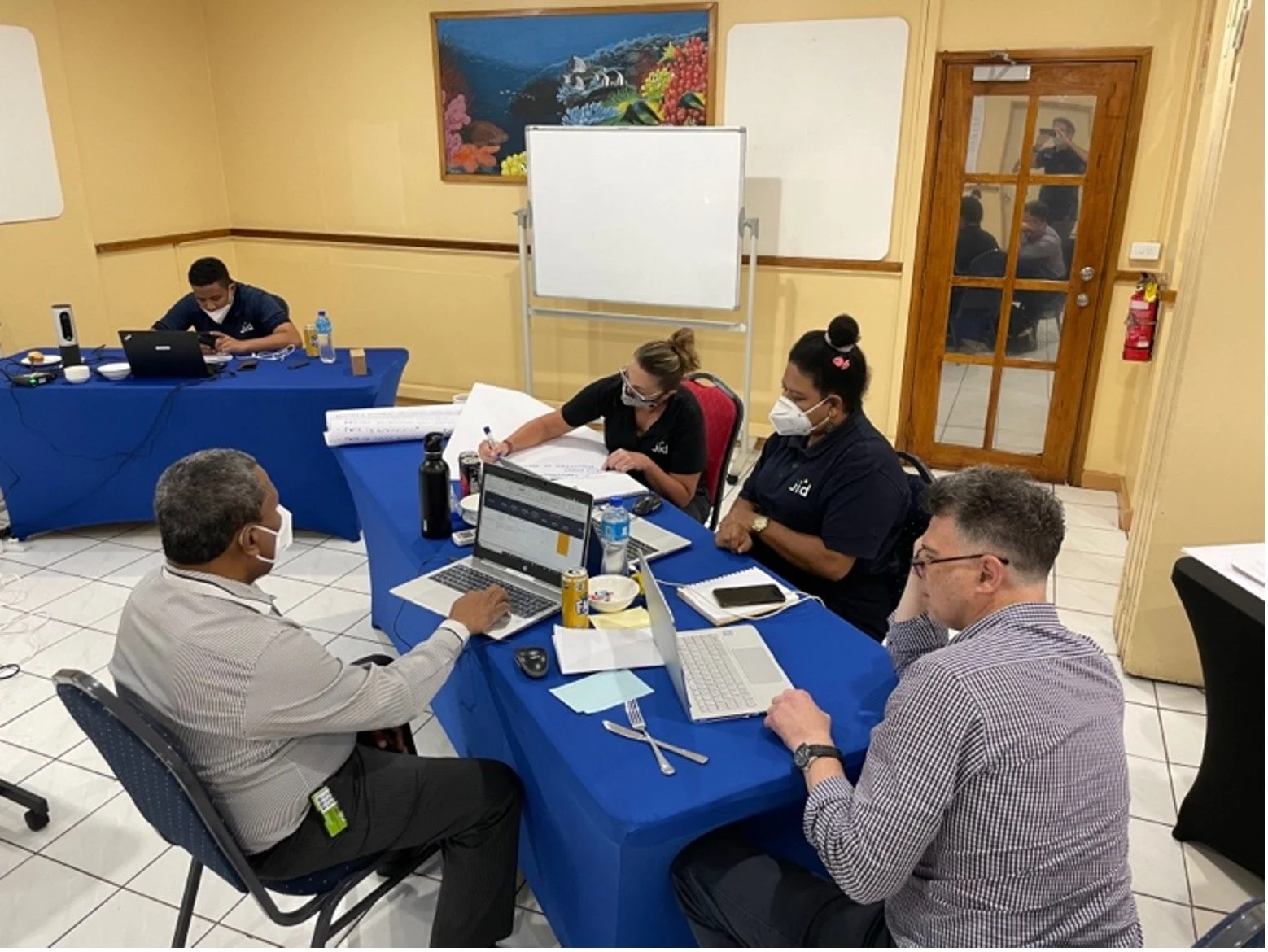
A leadership alignment workshop facilitated by Dave Lavers in Papua New Guinea, 2021. Photo courtesy of Dave Lavers.
What It Comes Down To
The question facilitators most often wrestle with is whether the investment is worth it: the cost, the time and the vulnerability of having your practice assessed.
Dave's answer is direct. He describes it as an investment in yourself, an opportunity to become a more intentional, reflective and ultimately more effective practitioner. The CPF pathway also offers an Endorsed Facilitator entry point for those newer to the field, while the CPF Master provides a further level of recognition for experienced practitioners. Recertification every four years keeps the credential and the practice behind it current.
For Linmin, the Core Competencies are not simply a checklist to pass. They are a framework she returns to throughout her practice, for designing sessions, responding when things do not go as planned and understanding her role in a group.
The value of the CPF, then, may not be the letters after a facilitator's name. It is having a framework and a language to keep questioning how you facilitate.
And for a profession built around helping people work better together, that may be the most valuable part of certification
To learn more about the IAF CPF pathway and upcoming assessment events, visit IAF's Professional Development page.
To make an enquiry, reach out to the IAF certification team here: certification@iaf-world.org.
Ready to take the next step?To start your Endorsed™ Facilitator (EF) application, firstly download the application form on the IAF's Professional Development page, and submit it to certification@iaf-world.org.
The IAF Oceania Conference 2026 takes place 14 to 16 October at Deakin University Waterfront Campus, Geelong, and will include a CPF Assessment Event on 13 October.