
by Rhonda Sparks-Tranks
First published November 2016
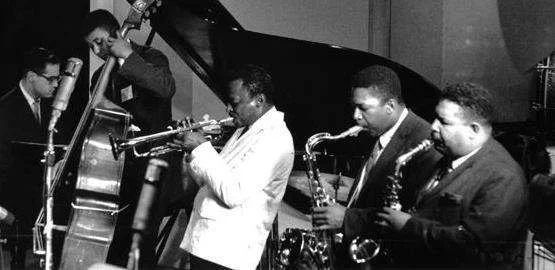
One day, many moons ago, while I was preparing to run a facilitator training workshop I was also listening to an old recording of Miles Davis playing Bye Bye Blackbird. As I listened it struck me how much jazz and facilitation are connected. Ever since, I’ve woven that connection into my facilitation training workshops.
Playing around with the idea of jazz SCAT singing I use the term as an acronym to further examine the Skills, Conceptual Frameworks, Attitudes and Tools required for facilitation and for jazz musicians working in a band. (This session comes after we have explored the role of a facilitator.)
Workshop participants draw correlations with skills that are developed through practice such as: listening, dexterity, agility, being able to work collaboratively and more. Facilitators and jazz musicians need a Conceptual Framework that underpins and informs their work. For the jazz musician it is musical theory. For facilitators the frameworks include things such as group dynamics, systems thinking, conflict resolution and participatory decision-making: what lies beneath the methodologies. When drawing the correlations on Attitude (aligning with our values, mindset and “way of being”) one workshop group collaborated to develop the following list:
co-creating live and in the moment
high tolerance for ambiguity
a willingness to go with the flow – someone else’s flow – not needing to know exactly what will happen next
respect for the abilities and contributions of others
preparedness to depart from the “script” while staying in key and in tune
knowing when to step in and when to step back
suspension of the need to be in charge or always in the spotlight
team work and collaboration
curiosity, openness to new ideas
a mindset of serving the group and what the whole group can achieve
recognising others know things you don’t and do things you can’t!
Tools? For a musician it is their instrument – knowing how to play it, what it can do etc. Facilitator’s tools are the processes and methods they use to reach appropriate and useful outcomes. These include "tools" such as process improvement methods, dialogue techniques, methods for achieving consensus, tools for analysing problems etc.
Then you put together the Skills, Conceptual frameworks, Attitude and Tools and practice – just like a musician. Always learning, reflecting and practicing.
You’ve got to learn your instrument. Then, you practice, practice, practice. And then, when you finally get up there on the bandstand, forget all that and just wail.
John Coltrane
To continue the connections between jazz and facilitation …
Musicians in a jazz band co-create the music and it differs with each audience experience – just like facilitators who co-create the outcomes with the meeting participants. Jazz musicians improvise within a framework. The music is spontaneous and not specifically prepared but it still follows musical form. Facilitators are always improvising. Facilitation agendas rarely go tightly to plan. Sometimes we may need to abandon the original plan altogether and take a different path to get the group where it needs to be – there's more than one road to the destination. We work within dynamic situations and make in-the-moment judgements about what to do when, but we do this best when we have a solid foundation in group dynamics, process design and more.
When observing a really skilled facilitator in action with a group, it may seem like they’re making it up as they go along – but if this was the case it would be chaos. They are being spontaneous within a context and a framework – just like jazz. Even free jazz that stretches the limits of improvisation within a form still works within a set of rules while breaking them.
Here’s an interesting article on the adage “You have to know the rules before you can break them”. This clearly articulates my views on improvisation in any field of endeavour, not just the creative arts. The same principles apply to facilitation e.g. knowing when to break the rule about ground-rules and not have ground-rules 🙂
Here’s the Miles Davis recording of Bye Bye Blackbird I listened to many years ago and still play in facilitation training workshops. Set aside 8 minutes of your life and relax as you listen to 5 masters collaborate. Then think … what other connections can you make between a jazz musician and a facilitator? Enjoy. Miles Davis on trumpet. John Coltrane on tenor saxophone. Red Garland at the piano. Paul Chambers on bass. Philly Joe Jones on drums.
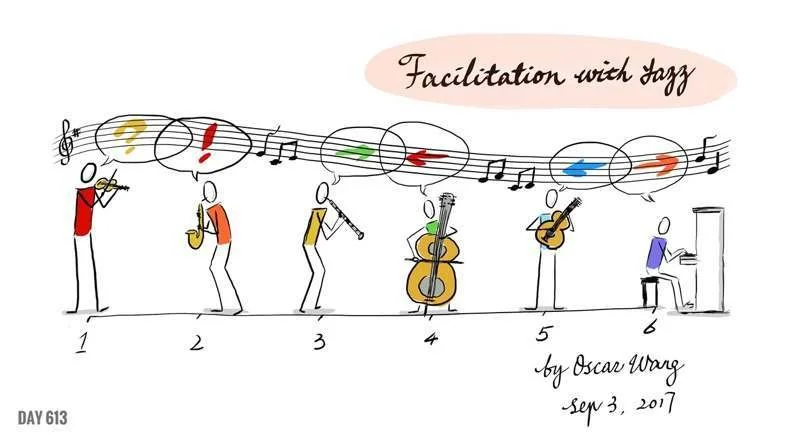
Course “notes” by a participant on my Holistic Facilitation training program run in a magnificent old tea house near Shanghai.
About the author
Rhonda Sparks-Tranks, B.A., Certified Professional Facilitator, Master
Rhonda has decades of experience as a trainer, coach and facilitator working with major corporations and organisations around the world. Her facilitation focus is usually: navigating organisational change after restructures, strategic direction setting and planning, and team development – particularly when work relationships have become dysfunctional.